the Talent Magnet

Book
Real Experiences That Make People Want to Stay
Every company has a culture. Most people don't know what theirs is until it's too late.
Let's be real: when you're hiring fast, it's easy to assume that new people will "get" your values just by reading an onboarding deck or sitting through a welcome breakfast. What usually happens? People show up with their habits and ways of doing things. They do their best guesswork about what matters here. Before you know it, everyone's on a different page.
The companies in this book figured out something no PowerPoint ever could: culture isn't explained. It's experienced. When you hand someone a paintbrush and say, "Show us what teamwork looks like," you're not just telling them what matters here—you're letting them feel it for themselves.
The Notebook That Taught Values
CodeCraft Solutions used to lose 30% of new hires within their first six months. Exit interviews always mentioned the same thing: "I never really understood what was expected here."
So they threw out their typical onboarding slideshow and tried something different.
Now, every new hire spends their first afternoon painting a wooden notebook cover. Not random art—they choose colors that represent the company's core values. Blue for trust. Green for growth. Orange for creativity. Red for urgency when it matters.
The process forces conversations that never happened in conference rooms. Why did you mix blue and green for that section? What does "trust" look like when it's combined with "growth"? How much orange feels right for your role?
New hire Jessica mixed deep blue with tiny streaks of red, explaining that she saw trust as steady but ready to move fast when clients needed help. Her manager, watching her blend colors, understood immediately how Jessica approached deadlines differently from their last hire.
The smell of paint, the feel of wood grain under their hands, the decisions about which colors to blend—these stick in memory far longer than any laminated poster. Six months later, when Jessica pulls out her notebook in meetings, she remembers not just what the values are, but what they felt like to choose.
Their retention rate is now 91%. The painted notebooks aren't just personal tools—they're proof that someone took time to help each person understand what matters here, with their hands as well as their head.
When Shirts Became Stories
The design team at Pixel & Print was growing fast. Too fast. New people kept joining projects mid-stream, and everyone had different ideas about how collaboration worked.
Their solution sounds simple: every new team spends its first week screen printing t-shirts together. Not because anyone needs another t-shirt, but because the process reveals everything about how people work together.
When the latest team of five gathered around the screen printing station, the real personalities emerged quickly. Marcus wanted to plan every color placement before touching ink. Sarah jumped straight into experimenting with textures. David kept adjusting other people's work to make it "better." Elena made sure everyone got equal time with the good squeegees.
By the time they were cleaning up, they'd negotiated their way through dozens of small decisions that mirror exactly what happens on client projects. Who speaks up when something isn't working? How do you give feedback without taking over? What happens when someone's idea doesn't match the vision?
The t-shirts they made weren't perfect. Marcus's careful planning created clean lines, but it felt rigid. Sarah's experiments added energy but made some text hard to read. David's improvements helped, but he had to learn when to stop editing other people's sections.
Three months later, when that team faced their first real client crisis, they already knew how to work together. The t-shirt afternoon had taught them more about collaboration than any handbook ever could.
The shirts hang in their workspace now, not as decoration, but as reminders of lessons learned with ink-stained hands.
The Art That Made Quality Real
Premier Manufacturing had a problem. Their definition of "quality" looked great in their employee handbook, but new workers interpreted it completely differently. Some thought it meant perfection. Others thought it meant following procedures exactly. A few thought it meant working more slowly to avoid mistakes.
The confusion was costing them time, materials, and good people who couldn't figure out what success looked like.
Their solution came from an unexpected place: the first week orientation now includes an hour where new employees create small art pieces about what "quality" means to them. Clay, paint, colored paper—whatever helps them show their thinking.
The results surprised everyone. Maria, coming from automotive, sculpted a small clay figure balanced perfectly on a narrow base—quality as precision, and stability. James, with a background in food service, painted quick, confident brushstrokes that looked effortless but required real skill. Linda created a collage that showed layers building on each other, each one supporting the next.
When they shared their pieces, the conversation that followed was unlike any training session they'd ever had. Maria explained that in her experience, quality meant getting measurements exactly right, every time. James talked about how quality in his world meant working efficiently under pressure while never compromising the result. Linda described quality as a foundation that lets you build something better next time.
Suddenly, their supervisor could see why new employees approached tasks so differently. Quality wasn't just one thing—it was precision AND efficiency AND continuous improvement, depending on the situation.
The art pieces sit on a shelf in the break room now. When quality questions come up, people point to them. "Are we talking Maria quality or James quality here?" It's become shorthand for conversations that used to take hours to untangle.
Why Touch Matters More Than Talk
What all these places have in common isn't some fancy theory. It's simple: when you make abstract ideas physical, people remember them. When you use your hands and your senses, learning becomes real. And when you invite people to create together instead of just listen, they feel genuinely welcomed—not just tolerated.
This isn't about turning everyone into artists. It's about making "belonging" something you can see, touch, and remember.
The Culture You Can Feel
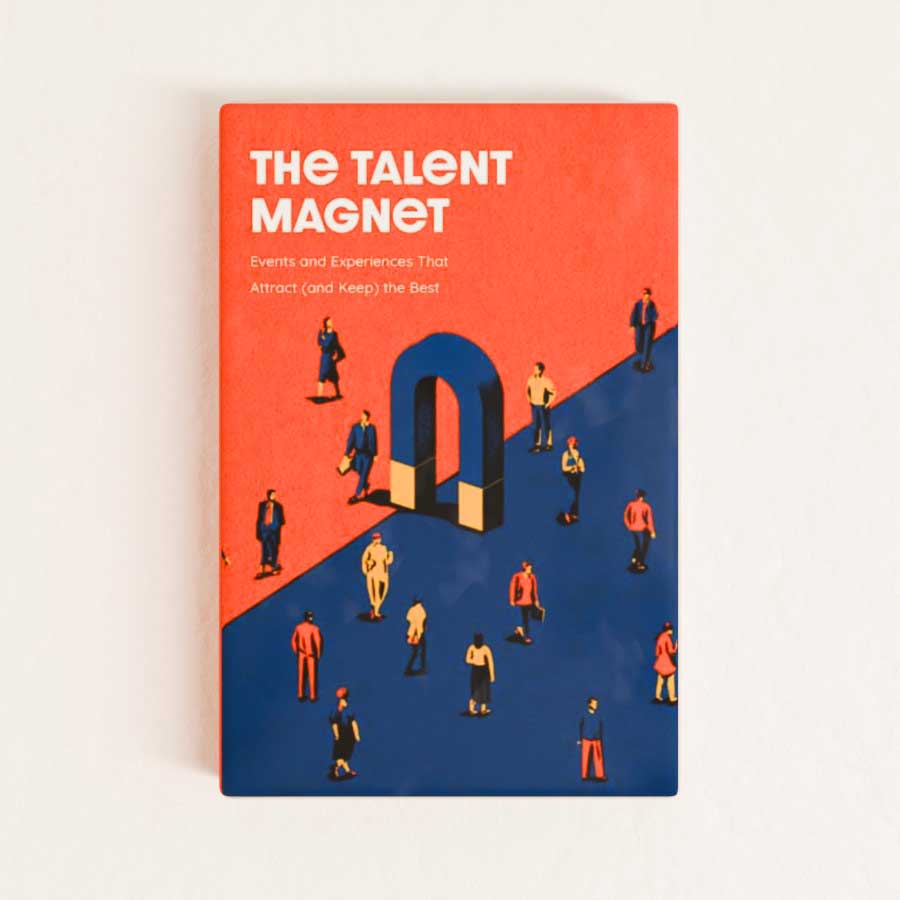
The Talent Magnet collects stories from companies that discovered that culture isn't something you explain, it's something you experience together.
Because at the end of the day, nobody feels loyal to a list of values on a slide. But they'll always remember how it felt to be invited in for real, with paint on their hands and a clear sense of what matters here.
These are the companies where people want to stay. Not because of the perks or the ping-pong table, but because they can feel what the culture is, right from day one.


