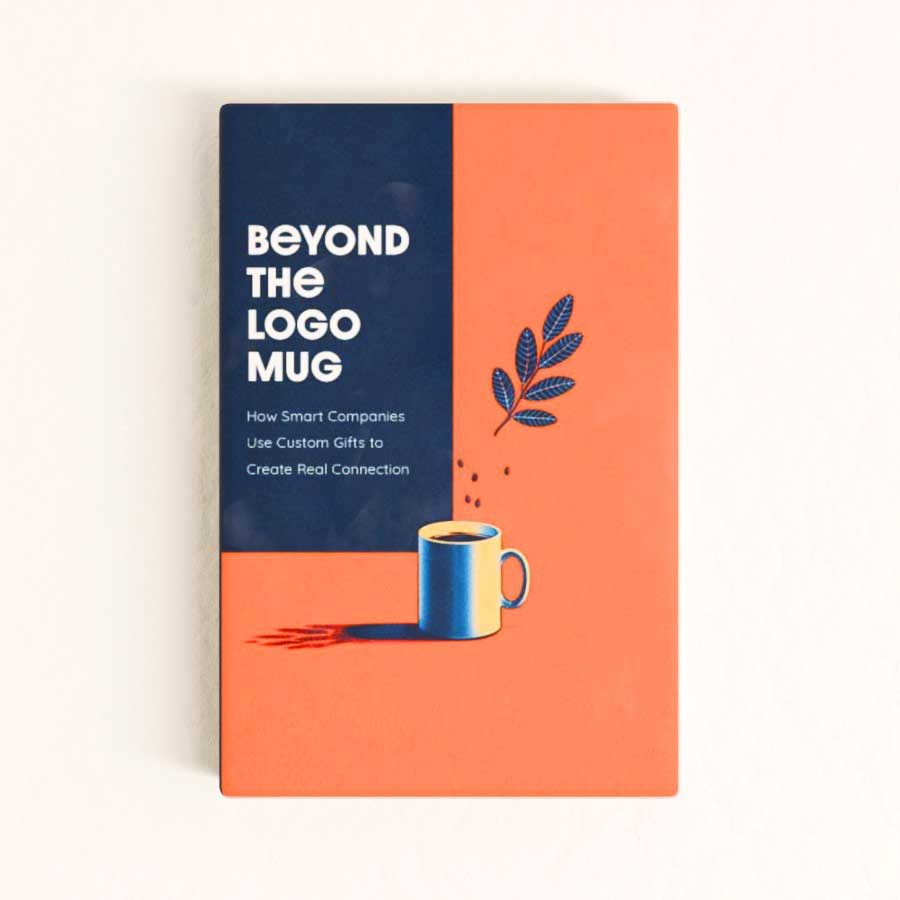
Beyond the Logo Mug

Custom Solutions
Why Swag Fails (and What Makes People Feel Welcome)
It's your first day at a new job. Someone hands you a box: a logo mug, a notebook with the company name embossed in gold, maybe a branded pen that clicks just like every other branded pen you've ever used.
You smile. Say thanks. Put the mug in your kitchen cabinet where it joins the collection from your last three jobs. The notebook goes in a drawer. The pen disappears by lunch.
That's what most welcome packs accomplish. They're safe, easy, and instantly forgettable.
When Welcome Means Something
This book is about the companies that decided to do things differently. They realized that if you want people to feel like they belong, you have to actually notice them. Not just slap a logo on something and call it "company culture."
The difference isn't about spending more money. It's about spending more attention.
The Startup That Painted Stories
At a tech company in Portland, new hires don't get the standard swag bag. Instead, they get a wooden notebook cover that someone on their new team hand-painted specifically for them.
Before the new person's first day, the team learns something about their background. Maybe they grew up near the ocean. Maybe they studied art history. Maybe they mentioned loving their grandmother's garden in the interview.
The notebook cover reflects that story. Ocean blues and sandy browns. Rich burgundies like old tapestries. Soft greens with tiny flower details.
When Sarah from marketing got hers, painted with small mountain silhouettes because she'd mentioned hiking in Colorado, she didn't just say thank you. She asked who painted it. That started a conversation. Which led to lunch plans. Which led to Sarah actually feeling connected to her teammates before her first project meeting.
The notebook costs about the same as a branded leather portfolio. But one sits in a supply closet. The other sits on Sarah's desk, where visitors always ask about it.
The Consulting Firm That Built Together
Henderson & Associates used to give new hires the usual: branded portfolio, company pen set, coffee mug with the firm's mission statement printed in tiny text nobody ever reads.
Then they tried something different. Instead of handing new employees a box of stuff, they invited them to make something.
Every new hire joins a two-hour workshop during their first week. The whole team gathers around a conference table covered with colored glass, wooden frames, and small mirrors. They build kaleidoscopes together.
But here's what makes it work: halfway through, everyone swaps pieces. You start building your own, but you finish with components that other people chose. Everyone leaves with something that contains a bit of everyone else's decisions.
Marcus, who joined the audit team last month, keeps his kaleidoscope on his bookshelf. When clients visit his office, they always pick it up and look through it. "We made these as a team during my first week," he tells them. It's become his favorite way to explain what the firm is like.
The Family Business That Shared Its Roots
Westfield Furniture has been making dining room tables for sixty years. Their welcome gifts used to be predictable: logo t-shirt, company history booklet, gift card to the local coffee shop.
Now every new employee gets something different: a small piece of wood, carved from leftover material in the workshop, sanded and finished by hand. Each one is unique because each piece of wood is different.
But the gift isn't just the wood. It's the story that comes with it. Tom, the master craftsman, tells each new hire where their piece came from. This oak came from a tree that fell in the storm three winters ago. This walnut is from the same board we used for the mayor's kitchen table. This cherry wood has been aging in our warehouse since before you were born.
Jennifer, who joined the accounting department, keeps her piece of maple on her desk. When she's having a frustrating day with spreadsheets and invoices, she picks it up and remembers that she works for a company that builds things that last. Her piece of wood connects her to something bigger than her daily tasks.
What These Stories Teach
The stories in this book aren't about more expensive swag. They're about noticing the little things: who someone is, what they care about, how they want to show up at work.
Sarah's mountain notebook cover worked because someone took time to remember what she'd said in casual conversation. The kaleidoscope workshop worked because it gave people something to do together, not just something to receive. Jennifer's piece of maple worked because it connected her to the company's actual work, not just its branding.
Why Real Beats Branded Every Time
It turns out, people remember what feels real. A mug with your name written on the bottom in Sharpie means more than another logo cup ever will. A notebook cover painted by your teammate beats any embossed leather folder.
Beyond the Logo Mug is for anyone tired of "culture" that looks good in photos but feels empty in practice. It's about using hands-on moments to actually welcome people, not just tick a box on the HR checklist.
Because belonging doesn't come in a box shipped from a promotional products warehouse. It comes from people noticing each other, one small gesture at a time.
The wooden piece on Jennifer's desk. The kaleidoscope on Marcus's bookshelf. The painted notebook cover is on Sarah's desk. These aren't just welcome gifts. They're proof that someone thought about who was walking through the door, not just what to put in their hands.


