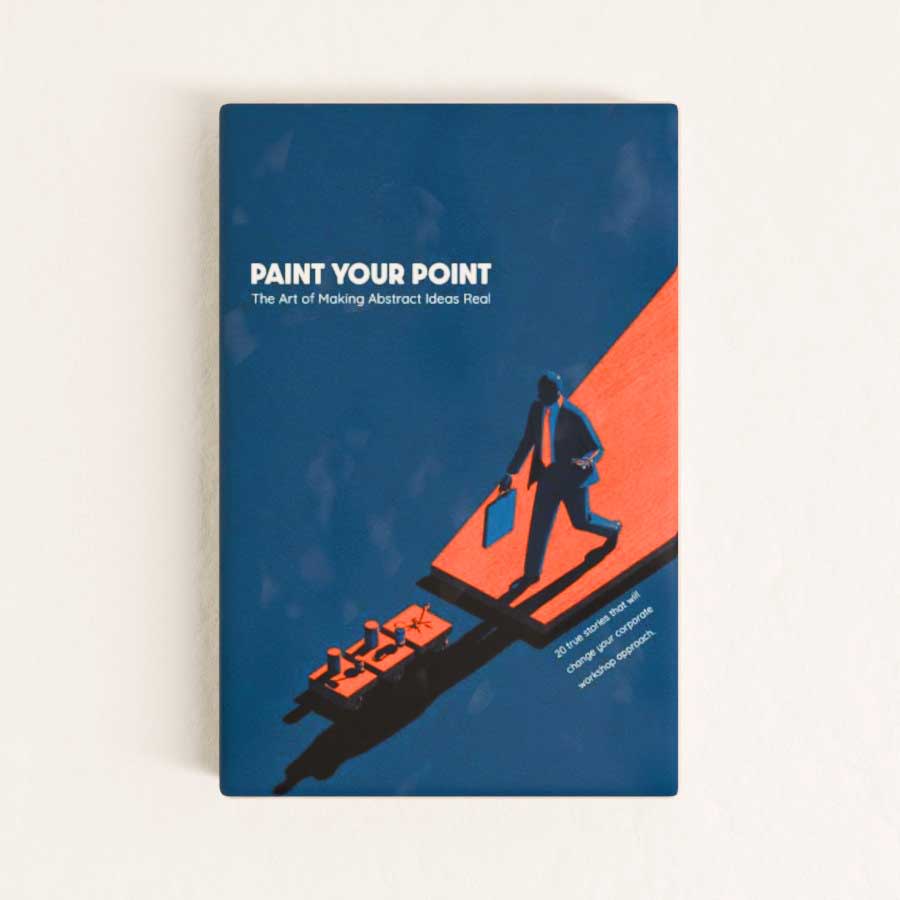
Paint Your Point
Book
The Art of Making Big Ideas Make Sense
Ever sat in a meeting where people toss around words like "alignment" or "innovation" and everyone nods—but you know nobody's picturing the same thing?
It happens all the time. We love talking about ideas, but rarely do the work to make sure we're talking about the same thing.
This book is about what happens when teams stop trying to solve everything with words and start making things together. Not because it's cute or trendy, but because the act of making forces people to clarify what they mean. Suddenly, "customer-centric" isn't just a buzzword—it's something you can hold in your hand.
When "Customer First" Became Real
The leadership team at First National Bank had been throwing around "customer first" for months. It was in their mission statement. It was on the conference room walls. Everyone agreed it was important.
But when they actually tried to define what it meant, the room got quiet.
So they skipped the next meeting and spent an afternoon screen printing t-shirts instead. Each person had to design their version of "customer first." No abstract discussions. No PowerPoints. Just fabric ink and their best attempt to make the concept visual.
One manager printed a shirt with two hands passing a cup of coffee. Another made one with a giant open door. The head of operations drew a clock with extra-wide hour marks, representing more time for each customer interaction.
When they laid all the shirts on the conference table, everyone saw—right there in ink—how differently they were interpreting the same phrase they'd been nodding about for months.
The shirts became shortcuts for bigger conversations. When someone suggested a new policy, they'd ask: "Is this coffee cup thinking or open door thinking?" The images gave them a language for decisions that "customer first" alone never could.
Six months later, those shirts still hang in their offices. Not as art, but as reminders of the day they finally figured out what they meant when they talked.
The Prototype That Prevented Disaster
The software team at DataFlow had been building wireframes for their new analytics dashboard for three months. Clean. Logical. Everyone agreed they looked great.
Then their product manager suggested something strange: before writing any code, they'd build a wooden prototype of the interface.
The team thought it was ridiculous. How do you make software out of wood?
But they spent a Saturday in a workshop anyway, cutting pieces of birch plywood to represent different screen elements. Navigation bars became actual bars you could move around. Data visualization sections turned into wooden blocks you could stack and rearrange.
Within an hour, problems emerged that months of digital wireframes had hidden. The prototype felt awkward to manipulate. Key features weren't intuitive when you had to physically interact with them. The flow that looked smooth on screens felt clunky when your hands had to move through it.
Someone pointed out that users would need three different hand positions to complete one common task. Another realized that their most important feature was buried too deep in the physical hierarchy to ever get noticed.
They scrapped two-thirds of their original design that afternoon.
The app they eventually launched became their most successful product release. The wooden prototype still sits on the conference table, a reminder that sometimes you need to touch something to understand if it works.
The Art That Said Everything
Memorial Hospital was losing new doctors faster than they could hire them. Exit interviews revealed frustration, but the reasons were always vague: "cultural fit," "expectations," "work environment."
The chief of staff decided to try something different with the next batch of residents. Instead of the usual orientation presentations, she asked each new doctor to create a piece of art about their first month on the job.
Some painted with watercolors. Others used collage. One resident built a small sculpture out of medical supplies and cardboard.
The results were startling. One painting showed enormous hands reaching toward a tiny figure in scrubs. Another depicted a maze made of hospital corridors with no exit signs. A sculpture represented the weight of decisions as literal stones balanced precariously on medical charts.
When the residents shared their pieces, it was the first honest conversation administrators had ever heard about what new doctors experienced. The art gave words to feelings that were hard to articulate in formal feedback sessions.
The paintings revealed that new doctors felt overwhelmed not by medical challenges, but by administrative chaos. The sculptures showed isolation, not intellectual inadequacy. The collages mapped confusion that better signage and clearer procedures could solve.
Six months later, retention rates had improved by 40%. The art pieces hang in the orientation room now, not as decoration, but as conversation starters for each new group of residents.
Why Making Beats Talking
This isn't about "team building" for its own sake, or making art to hang in the break room. It's about using your hands—and your senses—to turn fuzzy ideas into something real.
When people build together, they have to get specific. They notice details that words gloss over. They ask better questions because the materials force them to.
You can talk about "user-friendly" for hours without agreement. But when you're holding a wooden prototype that feels awkward in your hands, everyone immediately understands the problem.
When Words Aren't Enough
Paint Your Point collects stories from teams who discovered that sometimes, a paper stencil or a block of wood can get you further than a hundred meetings ever could.
If you want your team to actually understand each other (not just pretend to), it's time to make something together.
Because clarity doesn't come from talking more—it comes from making ideas real, side by side.


